Magazine
Intensify Worker-Peasant Struggles; Resist Ruling Class Policies; Advance for an Alternative
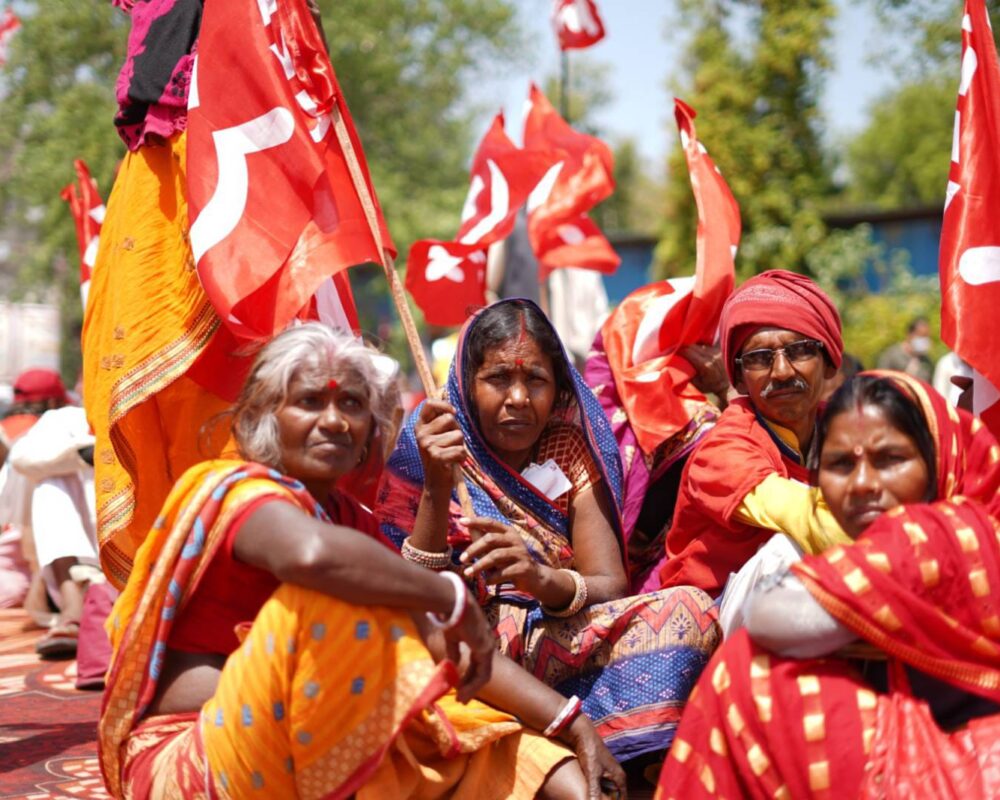
The ever-deepening systemic crisis of capitalism, the unprecedented pandemic, and the associated distress have exposed the fact that under the neoliberal paradigm, we are seeing a fast-paced regression into barbarism. The utter insensitivity of the ruling classes to the increasing inequality, unemployment, poverty, hunger, disease and destitution faced by the vast majority and the unbridled drive to maximise profits of a miniscule section of corporate cronies even during the devastating pandemic is a case in point.
Globally, the richest 1 per cent of the world have accumulated nearly twice as much wealth as the rest of the 99 per cent of the world’s population put together over the two pandemic years. In India, the cronies of the BJP Government were amassing wealth even as the masses were reeling under acute distress. More than 40 per cent of India’s wealth is owned by 1 per cent of its people. The number of billionaires in India increased from 102 in 2021 to 205 in 2025. In stark contrast, nearly 23 crore people – the highest in the world – live in poverty.
The worst manifestations of the regression into barbarism were the mass exodus of migrant workers during the lockdown, floating dead bodies on the Ganga due to the absence of oxygen and bare minimum health facilities, even as the corporate communal regime accumulated crores in the name of PM-CARES and their cronies accumulated wealth by the loot of national resources, takeover of Public Sector Undertakings and so on.
The last 11 years of the Narendra Modi-led BJP Government have also witnessed an unprecedented number of distress suicides by the peasantry, agricultural workers, daily wage workers and unemployed youth, a staggering number of more than 5 lakh. The agrarian crisis has intensified, leading to pauperisation, dispossession and a precarious situation for the peasantry. To divert attention from this dismal situation, they have resorted to communal polarisation, attacks on minorities and the oppressed. Militant struggles have been built across the globe by the working class and the peasantry building resistance to neoliberal policies. India has also witnessed massive struggles over the last 11 years and even achieved historic victories that have forced the authoritarian regime to retreat.
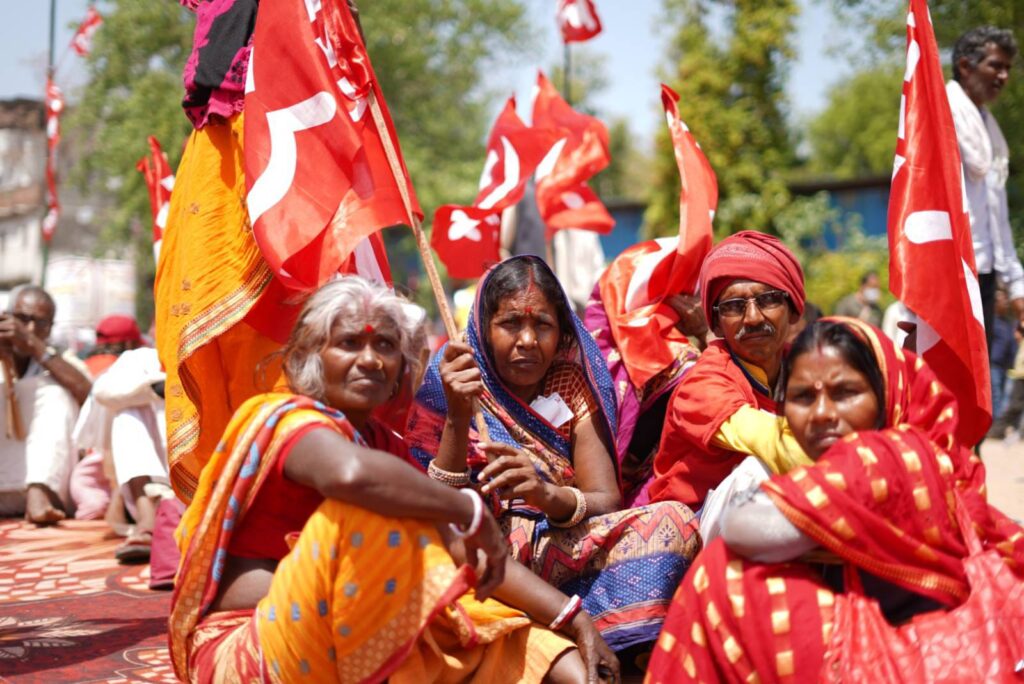
The All India Kisan Sabha (AIKS) has launched independent struggles and expanded its reach to newer regions over the last 11 years. The Kisan Sangharsh Jatha and the Kisan Sangharsh Rally organised independently by the AIKS in November 2016 were the first All India protests against the Narendra Modi-led BJP Government’s disastrous demonetisation decision. Struggles of the peasantry in Rajasthan and the Kisan Long March from Nashik to Mumbai in Maharashtra could defeat the ruling BJP Government and force it to accept demands, thereby giving a clear message that the BJP Government was not invincible. These struggles caught the imagination of people and generated confidence.
AIKS also took the initiative to build issue-based unity and launch joint struggles under the banner of the Bhumi Adhikar Andolan (Land Rights Movement). The building of an issue-based unity against the draconian Land Acquisition Ordinance immediately after it was promulgated in December 2014 and struggles by the Bhumi Adhikar Andolan, with the opposition parties also taking up cudgels in Parliament, led to its withdrawal. This was the first defeat handed down to the authoritarian corporate communal BJP Government by united movement.
By June 2017 after the killing of farmers in police firing at Mandsaur in BJP-ruled Madhya Pradesh, yet another issue-based unity called the All India Kisan Sangharsh Coordination Committee (AIKSCC) was formed which took the struggle to a different plane. The AIKSCC had over 250 farmers’ organisations with the AIKS playing a significant role. It could also build up massive mobilisations around the issue of remunerative prices and freedom from indebtedness. The Central Trade Unions (CTUs) came together and pioneered coordinated issue-based struggles under their leadership. Agricultural labour unions also had united struggles, with AIAWU playing a leading role.
Struggles were launched against the attack on people’s livelihoods, the demonetisation-led crisis, attacks in the name of Gauraksha, against privatisation and the sale of Public Sector Undertakings, against encroachment on Forest Rights, against the National Monetisation Pipeline, and various other issues. The Joint Platform of CTUs has had a longer presence, and they have played the role of countering neoliberal policies for decades; their experience has also benefited the peasants’ movement.
A conscious initiative was made to build united struggles of the working class and peasantry to combat and resist the corporate-communal Government and the neoliberal policies. Over a decade of continuous engagement, collective decision making and coordinated united action a rock-solid unity of the class fronts representing the three producing classes, the CITU, the AIKS and the AIAWU has been achieved. United class action transformed from mere statements of solidarity or token support into active participation in struggles built up independently by each of these organisations.
In 2018 when the corporate media was busy writing epitaphs for the red flag, the most militant struggles were led by CITU, AIKS and AIAWU. After an intensive joint campaign, on Quit India Day, 9th August a massive joint action of civil disobedience and courting arrest – Jail Bharo was held in which over half a million participated across the country. This was followed up in quick succession by the first-ever joint mobilisation of the three organisations in front of Parliament. It was on 5th September 2018 that the Mazdoor Kisan Sangharsh rally was held upholding the fundamental guiding principle of worker-peasant unity.
A feature of the recent General Strikes by the working class has been a simultaneous call for Grameen Bharat Hartal by the peasantry and agricultural workers on the same day. These incessant struggles have built an atmosphere against the authoritarian corporate communal Narendra Modi-led BJP Government. During the pandemic and the lockdown when the whole world was still grappling with the disease and an all-pervading sense of fear was prevalent, at the initiative of the working class the three organisations within a month of the lockdown came forward for united struggle demanding income support, food security, employment under MGNREGA, unemployment wages, universal health facilities and social security.
The BJP Government retaliated by an attack on the peasantry and the working class while giving humongous concessions to its corporate cronies. The 3 pro-corporate Farm Laws aimed at handing over Indian agriculture to the corporates and 4 Labour Codes snatching away the hard-won rights of the working class, all aimed at maximisation of profits and unbridled loot, were enacted in the most undemocratic manner. They hit at the very federal structure of the Constitution. The move was resisted with all the might of the peasants and workers.
A new issue-based unity of more than 500 peasant organisations called the Samyukta Kisan Morcha (SKM) emerged, drawing in the widest sections of the peasantry, cutting across class lines. The CTUs called for a General Strike on 26th November 2020 while the SKM called for Grameen Bharat Hartal (Rural India Strike) and Delhi Chalo (March to Delhi) from states neighbouring the National Capital. It became a 380-day long resolute struggle of lakhs of peasants with the active support and participation of the working class and the agricultural workers, with the martyrdom of nearly 736 farmers. The BJP Government was forced to apologise and withdraw the Farm Laws. It also failed to implement the Labour Codes in the wake of resistance. One cannot forget that the struggle was in the midst of a pandemic and when the fear of the disease kept large sections confined indoors under the stringent lockdown. They first won a victory over fear of the pandemic, of State repression, and that in no small measure helped in the final victory when the three Acts were withdrawn.
The SKM decisively created the narrative that the struggle was against corporate loot; it was against the Modani Model, pitting the peasantry directly against the likes of the Adanis and Ambanis. The struggle epitomised them as corporate cronies of the ruling regime for whose profiteering Narendra Modi was willing to sacrifice the interests of millions of peasants and workers. This narrative was amplified by the opposition parties too and played a significant role in the various electoral defeats of the BJP. The Muzaffarnagar Kisan Mazdoor Mahapanchayat clearly proclaimed that the divisive communal agenda would be defeated by the unity of workers and peasants. The SKM call BJP Ko Sajaa Do / Punish BJP was carried out across the country and SKM-CTUs launched many campaigns exposing the pro-corporate, communal policies of the BJP. A campaign against the Agniveer Scheme, the treatment of women wrestlers and other issues were also taken up.
The coordination between the SKM and the CTUs and unity in action was a major factor in the victory achieved. It is notable that withdrawal of the Electricity Act Amendments was a demand of the SKM struggle and also an issue of the working class. The support of the peasantry to the struggle of the workers of Visakhapatnam against the privatisation of Vizag Steel is also notable. Yet another defeat was handed over to the ruling classes when the Electricity Workers in Maharashtra defeated attempts to privatise power distribution firms and hand them over to the Adanis.
United rallies have given a clarion call against the Hindutva fascist forces in defence of the democratic rights of the people and federal rights of states. A resolute political-ideological counter to the neoliberal corporate-communal regime and a united move to advance towards an alternative was highlighted. This will act as the fulcrum for building the broadest unity around a people’s alternative and hand over a decisive defeat to the enemies of the people.
The peasants and workers have been the most consistent force that has relentlessly built up struggles against the BJP regime from day one of Narendra Modi coming to power a decade ago. Coordination between different classes in such a manner that they complement each other for achieving a common objective as well as defeat a powerful enemy was a very difficult proposition. In the process of incessant struggles, this is exactly what the peasants’ movement achieved. It quickly realised that cross-class alliances are indispensable. Building of broad issue-based unity against a common exploiter or policies is the only way of scripting victory in these dark times. Significantly, the peasant struggles managed to bring on the centre stage the overarching agrarian crisis, farm suicides, indebtedness, need for legal guarantee of Minimum Support Price (MSP), public investment in agriculture and rural development etc.
New attacks are going on in the drive to hand over agriculture to agribusinesses. Electricity is being privatised and pre-paid smart meters are being imposed. The prices of inputs like seeds, fertilisers and pesticides are incessantly rising while there is no guarantee of remunerative prices. Unequal Free Trade Agreements are being entered into and under the pressure of American Tariffs, the Union Government, instead of countering them, has bent down and reduced the import duty of cotton to zero.
The attacks by the BJP Government at the Centre are increasing. Falling incomes, rising costs, indebtedness, dispossession and peasant suicides are increasing. Crops are not getting remunerative prices. Absence of employment opportunities is also leading to distress migration. In the wake of the two-pronged attack from the Union Government and many State Governments, the only answer is to build militant struggles to resist anti-peasant policies and launch result-oriented movements for alternatives. Most important, all efforts by the BJP-RSS to communally polarise and divide society must be defeated.