Magazine
Significance of the 26 November 2025 Protest
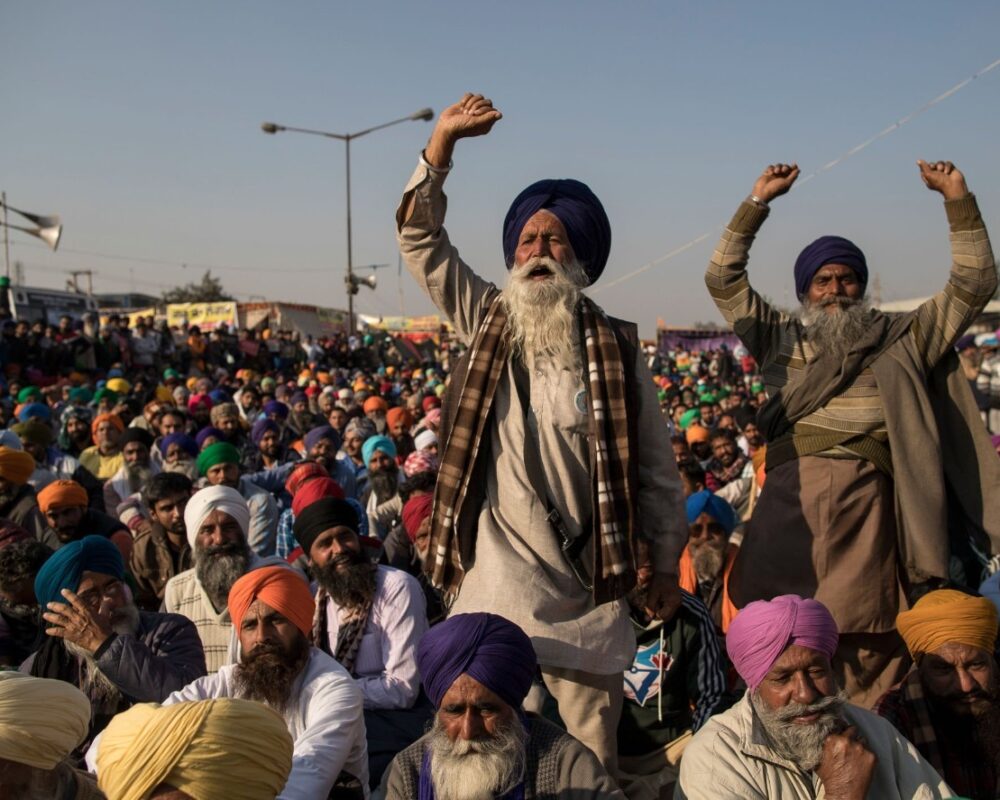
November 26, 2025 marks the 5th year of the beginning of the historic farmers’ struggle at the Delhi borders, actively supported by the united trade union movement. This is the largest mass struggle of peasants and workers in the contemporary history of Independent India, it sacrificed lives of 736 martyrs, and forced the Union Government to repeal the three Farm Laws. This struggle represented the anti-corporate resistance of the people.
The Samyukta Kisan Morcha (SKM), formed on the eve of that struggle, still upholds farmer’s unity across India, continuously organising campaigns and protest actions during the last five years independently as well as in coordination with the joint platform of central trade unions (CTUs), other unions of workers and agricultural workers.
However, under duress of the growing capitalist crisis, the Modi Government did not implement the assurances made to SKM dated 9th December 2021 including MSP@C2+50%, loan waiver and no privatisation of electricity among others. It has failed to address the unemployment crisis and is imposing the four Labour Codes.
In this context, the countrywide mass demonstrations on November 26, 2025 jointly called by SKM and CTUs will be the continuation of a protracted and massive struggle confronting the authoritarian, pro-corporate, communal policies of the Modi Government till it achieves all the immediate demands of the working class and the peasantry. Building the class unity of the working people can trigger a people’s movement for social change in the near future.
AIKS, AIAWU and CITU have resolved to undertake the crucial task of materialising the worker-peasant unity to strengthen the grip of the working people in villages, factories and workplaces. Consciously developing local struggles on burning issues and connecting them with policy demands including MSP, loan waiver, no privatization of electricity and repeal of Labour Codes is the way forward.
In the context of intensifying social contradictions under the corporate communal regime, there is no dearth of burning issues to unleash local struggles such as peasant suicides, rampant indebtedness, distress migration, forced sale of farm produce at dirt-cheap prices in the absence of a legal MSP guarantee and procurement system, scarcity and black-marketing of fertilizers, denial of compensation for victims of natural calamities, imposition of pre-paid smart meters, denial of assured 100 days of work and wage income under MGNREGA, denial of minimum wage to scheme workers of Mid-day meals, Asha, Anganwadi, indiscriminate land acquisition without rightful compensation, no protection to life and crops from the wild animal menace etc.
SKM has urged to campaign among the people, collectively organising meetings, conventions, seminars, padayatras, cycle yatras, panchayats in villages, leaflet distribution, door to door campaigns to popularize the 19-point charter of demands in order to advance the struggle, and successfully rally the working people on November 26, 2025 at state and district centres.
19-Point Charter of Demands of SKM
7-point Immediate Demands
1. The Union Government must implement the written assurance on MSP among other demands to SKM dated 9.12.2021. Parliament must enact a law to realize MSP@C2+50% with guaranteed procurement – through sharing surplus out of processing, value addition and trade on agro products. Immediately open Govt. Mandis/markets in all blocks in all states and prevent distress sale and ensure the declared limited MSP@A2+FL+50% to farmers across India. Raise the moisture limit on paddy procurement from 17% to 22%.
2. The Union Government must declare a comprehensive loan waiver scheme for farmers and agricultural workers. Control exploitation by MFIs; regulate interest rate, legal action against unlawful harassment of borrowers. Transfer RBI Surplus to NABARD to implement interest free credit scheme for peasants.
3. No privatization of Electricity and PSUs. No Smart Meters. Repeal Electricity Bill 2025. Provide 300 units of free electricity per month to all households.
4. Fight against Imposition of 50% US Tariff on India. No FTA in Cotton, Dairy sectors. Repeal the notification that scrapped 11% import tariff on cotton. Scrap Indo-UK FTA CETA. No FTAs that hurt the interests of farmers and workers. Ban on imports of all agricultural crops that bring down crop prices during normal crop cycles in India.
5. Declare all severe floods and natural calamities as national disasters. Declare judicial enquiry by a sitting judge of the Supreme Court on the causes of the flood situation and the impact of the corporate seizure of natural resources in the sensitive Himalayan regions without environment impact study. Rs 1 lakh crore compensation for all calamity affected states including Rs. 25000 crore for Punjab for lost lives, livelihoods and to rebuild the social and economic life of victims. Protect right to compensation of tenant farmers and agricultural workers. Make physical verification to estimate losses and make equal compensation for real losses mandatory.
6. Link MGNREGS with Agriculture and Dairy to benefit farmers. Ensure 200 days of work and Rs. 700 as wage. Resolve unemployment. No casualization, outsourcing, contractualization of work. Immediately end the ban on recruitment. Make appointments in the 65 lakh existing vacant posts in government and public sector. Save permanent employment. Reinstate the Old Pension Scheme. Stop privatization to save reservation. Strictly implement social reservations for SC/ST/OBC/Minorities.
7. End indiscriminate acquisition of agricultural land. Respect people’s right to rehabilitation and resettlement. No Bulldozer Raj, stringent action against belligerent bureaucracy. Compensate all victims of land acquisition violating the LARR Act 2013, with compensation at four-fold rates in rural areas and two-fold rates in urban areas.
12-Point Basic Demands
1. Repeal four Labour Codes and protect the right to minimum wage.
2. Strictly implement FRA and PESA to protect tribal rights on natural resources. No corporate takeover of land, forest, water and minerals. Enact law to end corporate mining, ensure 60% of the surplus from mining for the development of local people especially of tribal families.
3. Scrap the failed Prime Minister Fasal Bīma Yojana (PMFBY). Establish Insurance Corporation for crops and livestock in Public Sector, on the lines of the LIC.
4. Reinstate fertilizer subsidy of Rs. 87,000 crore curtailed in the Union Budgets. End black-marketing and ensure self-reliance in fertilizer production. Ensure water rights for entire agricultural land.
5. Provide Rs 10,000 per month old age pension to peasants and agri workers.
6. Register tenant farmers under the state agricultural department; provide all benefits of government schemes including credit, agricultural extension and compensation. Provide land for cultivation to all landless families, and houses to all houseless families.
7. Protect the federal rights of states with 60% share in the divisive pool including cess and surcharge. Amend the GST Act to reinstate taxation power of states. No National Cooperation Policy (NCP), No New Education Policy (NEP), No National Policy Framework on Agriculture marketing (NPFAM) and No Electricity Bill 2025 that trespass on powers of state governments. Strong States for Strong India. Protect financial autonomy of states to ensure public investment to modernize agriculture, accomplish agro-based industrialization and generate employment. Ensure MSP and minimum wage and end agrarian crisis, peasant suicides, distress migration.
8. Control the growing dreadful income inequalities by taxing the super-rich 1% people with 2% wealth tax and 33% inheritance tax, thus raising 9% of the GDP to universalize six fundamental economic rights of Food, Employment, Education, Health, Housing and Pension to all. Reinstate corporate tax at 30% from 22%.
9. Protect democratic rights of all citizens. Immediately release Sonam Wangchuk and other protesters. Revoke imposition of NSA. Settle the genuine demands of people of Ladakh. Ensure comprehensive electoral reforms with proportional representation. Reinstate public trust in the Election Commission of India by replacing the Home Minister in the selection panel with the Chief Justice of India and ensuring transparency in the election process. End hegemony of money and muscle power in elections. Enact law to ensure public funds for entire expenditure on campaigns. Repeal authoritarian laws of UAPA, the Public Safety Act of Maharashtra. Immediately stop putting people in jail for years without charge sheets and trials and initiate compulsory punitive action against the belligerent bureaucracy responsible for the violation of constitutional rights of citizens. Amend penal codes of BNS, BNSS and BSA that give increased powers to the State and police, restrict civil liberties, suppress free speech and legitimate political dissent.
10. Immediately build a proactive people’s movement to protect secular unity, especially Hindu-Muslim Unity. Civil vigilance including functioning legal cell to end spreading communal hate aimed at wrecking communal harmony. Free all the institutions of governance, including judiciary and bureaucracy from communal influence and protect unity in diversity of people of India.
11. Public campaign including preventive legal measures and public scrutiny to end atrocities on women and girl children, abuse and violence against Dalits, Adivasis and Minorities.
12. People’s movement against drug addiction and alcoholism. Ensure punitive action against criminal elements in administration and political hierarchy who are in connivance with the drug and narcotic business.