Magazine
El Niño Fears Loom Over India: Are We Prepared?
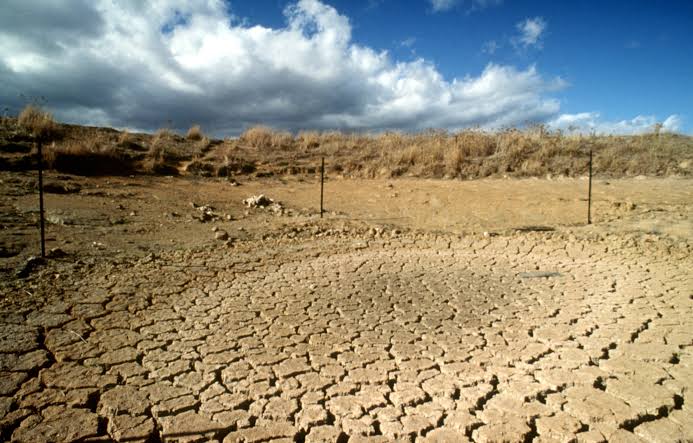
For some months, the words of an alien tongue – El Niño – have been making rounds in the country. With an erratic monsoon experience so far, fears of the worst are slowly becoming true. Dark shadows of droughts and agrarian suicides are looming again. What is this phenomenon? What is its history? What is the current status of El Niño’s advance? What are its effects on India’s farmers? What is the Union government’s policy response? Is it adequate?
At the outset, we must emphatically state that although climate disasters may have natural origins, their outcomes on human lives and livelihoods are entirely human-made, and also class-dictated. El Niño, like any other natural disaster, will hit the poor the earliest and the heaviest.
Understanding El Niño
El Niño and its counterpart La Niña are the two phases of the El Niño Southern Oscillation (ENSO), a naturally occurring ocean-atmosphere interaction. La Niña is a climate pattern marked by unusually cooler-than-normal sea surface temperatures in the central and eastern tropical Pacific Ocean. It can alter global weather patterns, often bringing increased rainfall to some regions and drought or warmer conditions to others. On the other hand, El Niño influences warms the oceanic waters, triggering extreme weather, droughts, and heatwaves across the globe. El Niño has a general warming impact on the planet. Over the Indian region, it has the effect of suppressing rainfall. This year, the monsoon in India is expected to be well below normal, mainly on account of the developing El Niño.
The ENSO phase and the intensity of El Niño and La Niña events are decided by the sea surface temperatures measured in a specific region of the Pacific Ocean, called the Niño 3.4 region. An El Niño is declared when the average sea surface temperature anomaly in this region surpasses 0.50°C. In the latest bulletin, this temperature is reported to have risen by 1.2°C. If it crosses the 2°C mark, we will be facing a ‘very strong’ El Niño.
Lessons from El Niño Years
The 2015-2016 El Niño is the strongest one in recent memory; this persisted for almost two years, from 2014 to 2016, andbroke several climate records. The Niño 3.4 index had remained above 2°C Celsius for well over four months. In India, both 2014 and 2015 figure in the top four driest years of the twenty-first century, with the monsoon rains in both those years remaining well below 90 per cent of the normal. It is not difficult to recall the morbid spree of farmers’ suicides that were reported in the country, especially in Maharashtra, in those years.
In fact, several of India’s worst droughts fell in El Niño years – 1972, 1982, 2009 and 2015. In the 11 instances of below-normal or deficient monsoon performance at an all-India level since 2000, six were classified as El Niño years by the Indian Meteorological Department (IMD).
The current El Niño event began in June and is predicted to intensify and continue into 2027. In early July itself, the IMD was ringing alarm bells with its forecast for country-wide rainfall to be below 94 per cent of the long period average, after a 40 per cent deficient rain in June. Normal rainfall forecast was limited to Rajasthan, Telangana, Andhra Pradesh, Maharashtra, and north Karnataka. The effects of an aborted monsoon are already showing on the economy.
Economic Consequences of a Weak Monsoon
Poor monsoon affects the economy in three ways: by reducing agricultural output and reducing the sector’s contribution to the economy; by hitting rural income and denting aggregate demand; and by threating to push up food prices, causing inflation.
As for output constriction, slowing of Kharif sowing in India is indicative: As of 10 July, farmers had sown kharif crops across 53.12 million hectares, down from 63.25 million hectares a year ago, according to government data. The sown area is also 1.8 million hectares below the normal acreage—defined as the 2021–25 average—reflecting sluggish planting across several rain-fed states. Paddy has seen one of the sharpest declines. India faces the likelihood of losing foodgrain production momentum gained in the last season (2024-25).
Secondly, as agriculture continues to support 55 per cent of India’s population and employs 46 per cent of the workforce, a loss in output was bound to hurt their livelihoods directly. Prof Bharat Ramaswami of Ashoka University told The Hindu that farm incomes could fall up to 10 per cent. As farm incomes fall, industries that depend on rural demand would be affected.
Thirdly, the Reserve Bank of India (RBI) has cautioned in its June bulletin that if the monsoon indeed weakens, domestic inflation will rise. Daily price data till 18 June showed that food inflation had risen, and the prices of edible oils, potatoes, onions and tomatoes had edged up.
These three outcomes should be seen in tandem with the fertiliser supply crunch caused by the US-Israel war on Iran, which has increased pressure on the government to release its buffer stocks, import more plant nutrients and thereby lose foreign exchange, which would ultimately hurt the rupee and its purchasing power. One legacy bank has noted in its report that El-Niño plus drought scenario may shave off 20-65 basis points off GDP growth.
Tardy Government Response
The Union government however has announced that the monsoon is reviving. After a high-level meeting in New Delhi on 8 July to review the El Niño conditions, Union Agriculture Minister Shivraj Singh Chouhan said the monsoon situation in the country had improved. The overall rainfall, after recording a 33 per cent deficit in June, had reduced to 24 per cent deficit in July. The Minister added that several parts of the country received good rainfall in recent days, resulting in the number of rainfall-deficient districts declining from 262 to 178.
What is the current situation of the monsoon? At the time of writing (a week after the minister’s comments), only isolated pockets, particularly over Northeast India and the Himalayan foothills, were receiving heavy rainfall while much of the country was waiting for fresh weather systems to emerge. The southwest monsoon had already slipped into a break phase and nothing substantial was to change till the end of July, according to the IMD.
The government’s mitigation plan has primarily been to advise farmers to shift to short-duration and low water-intensive crops such as maize, bajra and moong to reduce the impact of delayed rainfall. An El Niño Monitoring Cell, Crop Weather Watch Group, state-level control rooms and designated officers, to track monsoon progress, crop sowing, crop conditions and market trends have been set up, according to Shivraj Singh Chouhan. Contingency plans have been charted out for the vulnerable districts. When the tide comes, whether these measures can offset the structural dangers of low irrigation coverage (48 per cent of the country’s net sown area is rainfed) along with the already low storage levels across the 166 reservoirs, remains to be seen.
The Real Challenge: Public Investment for Water Security
India’s recurring vulnerability to El Niño is ultimately not a meteorological problem but a developmental one. As Prof R Ramakumar has argued, the country must move from disaster relief to ex-ante risk reduction by investing in drought resilience before crises occur.
Yet public investment in agriculture has steadily weakened over the neoliberal period. Public capital formation in agriculture and allied sectors has remained around 0.4–0.6 per cent of GDP for decades, far below the levels required to transform rural infrastructure. Public investment in major and medium irrigation projects, which drove agricultural growth during the Green Revolution, has stagnated, while the emphasis has increasingly shifted towards groundwater extraction through privately owned borewells. As a result, nearly half of India’s net sown area continues to depend entirely on rainfall, leaving millions of cultivators exposed to monsoon failure. Even today, despite decades of planning, only about 52 per cent of the net sown area has access to irrigation, while the remaining area remains vulnerable to rainfall variability.
This neglect has serious consequences. India has over 5,300 large dams, but expansion of canal irrigation has slowed sharply since the 1990s. Irrigation expenditure as a share of total public capital expenditure has declined compared to earlier decades, and many ongoing major irrigation projects remain incomplete due to chronic underfunding and delays. Consequently, farmers increasingly rely on private groundwater extraction, a strategy that is both costly and ecologically unsustainable, especially during prolonged droughts.
Disaster preparedness cannot be reduced to monitoring rainfall or advising crop diversification after the crisis has begun. The real answer lies in building resilient public infrastructure that guarantees water security before drought strikes.