Magazine
Editorial: a warm welcome to peasants’ voice!
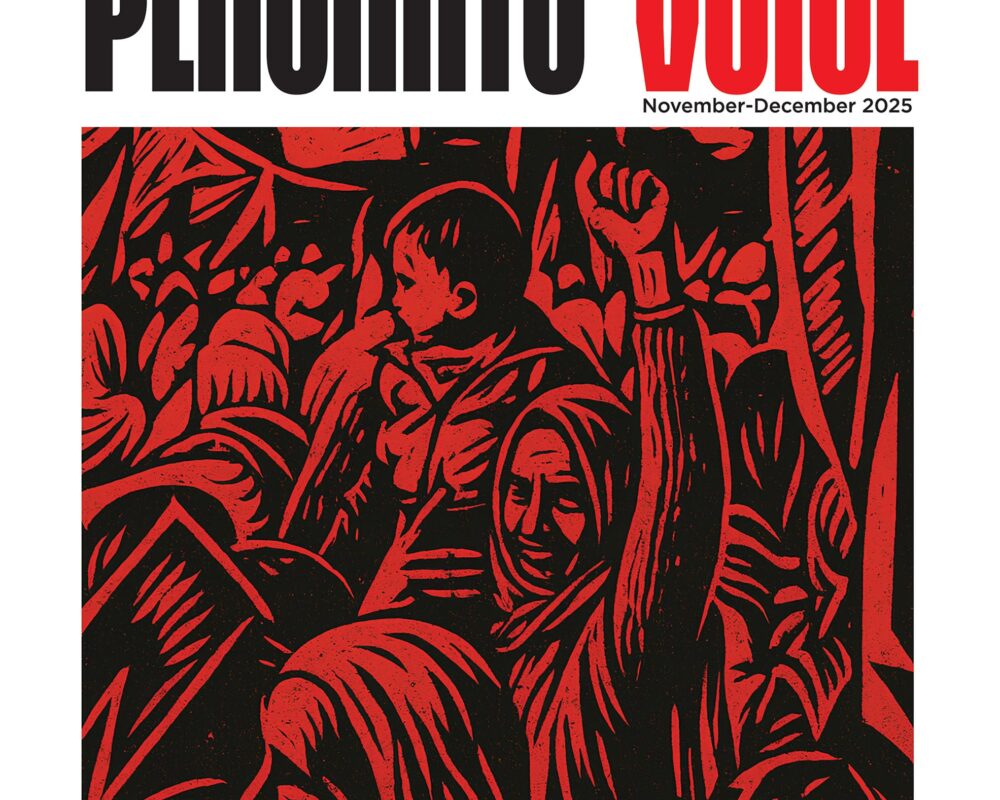
We extend a warm welcome to all our readers of this first issue of ‘Peasants’ Voice’, the central journal of the All India Kisan Sabha (AIKS), which we are confident will become the authentic voice of the fighting peasantry of India. We have, of course, been bringing out magazines even before this. For many years, we were bringing out our ‘AIKS Bulletin’. Then, for the last few years we had published several memorable issues of ‘Peasants’ Struggle’ in English and Kisan Sangharsh in Hindi. The difference is that ‘Peasants’ Voice’ is our first registered journal which will enlist regular subscribers from all over the country and will be posted to them.
The AIKS is the first peasant organisation in India. It was founded in the furnace of the freedom struggle against British rule on 11 April 1936 at Lucknow. We will soon be entering our 90th year. With a membership of over 1 crore 53 lakh (over 15 million) spread over 27 states and union territories in India, the AIKS is also the largest peasant organisation in the country.
It is a happy coincidence that the AIKS shares its birthday with one of the earliest champions of the peasantry in India, a revolutionary social reformer against caste and gender oppression, and one of the three whom Dr Babasaheb Ambedkar called his gurus – Gautam Buddha, Sant Kabir, and Mahatma Jotirao Phule. Phule was born on 11 April 1827.
The AIKS has a glorious legacy of massive peasant struggles against imperialism, landlordism, feudalism, capitalism, communalism, casteism, and neoliberalism. These struggles have led to the martyrdom of thousands of peasant men and women who fought bravely not only to win and retain their own rights, but also to further the cause of all the working people of India.
The historic pre-independence peasant struggles of the 1940s like Telangana in then Andhra Pradesh, Tebhaga in Bengal, Punnapra Vayalar and North Malabar in Kerala, Gana Mukti Parishad in Tripura, Surma Valley in Assam, and Warli Adivasis in Maharashtra, laid the foundations not only of the Kisan Sabha, but of the entire peasant movement in our country. It was some of these peasant struggles which, along with other factors, contributed to the formation of path-breaking Left-led state governments in Kerala, West Bengal, and Tripura.
The AIKS also led huge post-independence struggles of the peasantry like those against the Anti-Betterment Levy in Punjab, against the worst and most repressive forms of landlordism in Bihar, and against class and caste oppression in East Thanjavur in Tamilnadu, culminating in the inhuman killing by upper caste landlords of 44 Dalit agricultural workers at Kilvenmani – 23 children, 16 women and 5 men. In recent years the AIKS led the huge Mahapadavs and Kisan Curfews in Rajasthan, the massive Kisan Long March in Maharashtra, the fight against land acquisition in Karnataka, and many other struggles in various states.
In recent years, there have been large joint struggles of the peasantry, the most iconic being the one-year victorious struggle of lakhs of peasants in 2020-21 under the leadership of the Samyukta Kisan Morcha (SKM) at the Delhi borders for the repeal of the three pro-corporate, anti-peasant, and anti-people Farm Laws imposed by the Modi-led RSS-BJP government. There has also been the earlier victorious struggle in 2015 led by the Bhumi Adhikar Andolan (BAA), which forced the Modi regime to take back the amendments to the LARR Act of 2013.
A recent feature is the large joint nationwide actions by millions of peasants and workers led by the AIKS, AIAWU, and CITU, and even broader mass countrywide joint actions by the SKM and the Central Trade Unions (CTUs). The latest nationwide action was on 26 November 2025, to mark five years of the SKM struggle. All these have paved the way for worker-peasant unity.
Today, grave challenges confront the peasants and workers of India. By far the most dangerous is that posed by the RSS-BJP union government, which is led and controlled by Narendra Modi, Amit Shah, Mohan Bhagwat, Gautam Adani, and Mukesh Ambani, who are the symbols of everything that has gone wrong with India. In the last 11 years of its rule, the RSS-BJP-led regime has proved to be the most anti-people, pro-corporate, pro-imperialist, communal, casteist, authoritarian, corrupt, and unscrupulous government in the history of India since independence. Its neo-fascist character has been exposed before the country and the world.
All the institutions of democracy in India – Parliament, Legislatures, Central Agencies like the CBI, ED, IT, Media, Judiciary, now even the Election Commission, and the Constitution itself – have come under grave threat from the current rulers. The results of the recent Bihar assembly elections have again underlined the multifaceted danger of the RSS-BJP regime.
The anti-peasant bias of the Modi regime recently became crystal clear once again when it refused to extend any financial help to the millions of peasants and agricultural workers who faced calamity and ruin due to the terrible floods and excessive rains that lashed several parts of the country. Its most recent decision to implement the four pro-corporate and anti-worker Labour Codes, five years after they were passed in Parliament in September 2020, in the same session which passed the three Farm Laws, is a declaration of war not only against the working class, but also against all working people. And on top of this, this regime has the temerity and hypocrisy to issue false front-page advertisements in newspapers hailing these anti-labour Labour Codes as being pro-labour!
The other serious challenge facing the country is that of American imperialism under its new avatar Donald Trump. Trump’s Tariff Terrorism, his pressure on India to sign an unequal Free Trade Agreement with the USA, and the likelihood of Narendra Modi and his servile RSS-BJP regime succumbing to this pressure, will be a grave assault not only on millions of peasants and workers of India, but also on lakhs of small entrepreneurs who run thousands of Micro, Small and Medium Enterprises (MSMEs).
Already, under imperialist pressure, the Modi regime has removed the 11 per cent import duty (tariff) on cotton imports from the USA, adversely impacting cotton farmers in India, who are in a terrible and chronic crisis. Under Trump’s pressure, Modi has also agreed to cut down cheap oil imports from Russia and buy costly oil from elsewhere. This is an anti-national step.
The world today is changing. International resistance to the two-year-old Israel-US-led horrific genocide of nearly 75,000 Palestinian children, women, and men is increasing exponentially. Millions of people all over the world, more so in the imperialist countries, have consistently come on to the streets in solid solidarity with the suffering and struggle of Palestine.
The victories of Left-wing or Democratic Socialist candidates in recent elections in martyr Salvador Allende’s Chile, Uruguay, Ireland, Germany, Norway, and earlier in Sri Lanka are part of the effort to counter the rightward shift in several countries. The most dramatic victories were, of course, those for the Mayorship of New York and Seattle, and other smaller wins in the USA itself. Some of these victories, of course, need a balanced wait-and-watch approach. Increased solidarity with the peasant and workers’ movements in various countries of the world against the common enemy of imperialism and capitalism is the need of the times.
In this and future issues of ‘Peasants’ Voice’ we shall try to bring to you a series of perceptive articles on all the above issues. Of course, our primary focus will be on various aspects of the agrarian situation and the current challenges facing the peasant movement in India. We shall also bring you reports of independent and joint struggles led by
Finally, let us see what Lenin wrote 123 years ago in his seminal work, “What Is To Be Done?” He wrote, “The role of a newspaper, however, is not limited solely to the dissemination of ideas, to political education, and to the enlistment of political allies. A newspaper is not only a collective propagandist, and a collective agitator, it is also a collective organiser.”
And it is all these three aspects that ‘Peasants’ Voice’ will always keep at the top of its mind. Along with this English edition, a Hindi edition of this journal will also be published to cater to another large section of peasants in our country. Our several state journals will carry many of the articles in ‘Peasants’ Voice’ in their own national languages. In this way, we are sure that we will reach millions of peasants in our country – and encourage them to strengthen the peasant movement of India and also its mainstream organisation, the All India Kisan Sabha!