Magazine
Sinister Forces at Play with India’s Public Distribution System
India’s food security programme, one of the largest in the world, is being subjected to some significant revisions which puts its future in danger. There has been a continuous attack on India’s welfare architecture, earlier witnessed in the case of the Mahatma Gandhi National Rural Employment Guarantee Scheme (MGNREGS), and now the National Food Security Act (NFSA). Catering to 80 crore people, the NFSA is part of the legislations that were realised through consistent people’s campaigns and struggles and it recognised the Right to Food as a Constitutional mandate.
The amendment route adopted to weaken the NFSA and PDS, is part of the agenda to reduce subsidies and public spending on welfare. Reports have also suggested that through changes in rules, there has been a move towards greater privatisation, and monopolistic corporate control of the Food Corporation of India’s (FCI) storage silos. Furthermore, a digital currency push in the Public Distribution System (PDS) also points towards greater exclusion, portrayed in the garb of efficiency and ending pilferage. Since the defeat of the three Farm Laws, these have been newer attempts towards blunting the PDS and increasing the corporate footprint in India’s agriculture and food governance.
Amendments in the NFSA
The government recently garnered comments on the Draft National Food Security (Amendment) Bill, 2026. The major amendment proposed by the government is aimed at restricting the allocation of foodgrains for Antyodaya Anna Yojana (AAY) households, from the present 35 kg per month to 7 kg per person up to maximum of 35 kg. Households identified under the AAY are among the poorest of the poor. The reason for this move is supposed to be to curb ‘intra-category inequities, provide for more rational food grain allocation, and better align entitlements with nutritional requirements.’ It is argued that the provisions at present tend to benefit smaller households.
However, the government’s rationale has been countered and shows the bias against primarily the southern states, which have undertaken measures for family planning. These States stand to lose significant allocations of foodgrains from the central pool, under the revised amendment. An estimate prepared by The Business Standard, shows that while northern states with larger average household sizes, such as Bihar (5 members) and Punjab (4.64), stand to lose little or nothing, southern states with smaller family sizes would face steeper cuts: Kerala’s average AAY household would lose 13.5 kg a month, Telangana 15.61 kg, and Andhra Pradesh 15.89 kg. At the all India level, where the average family size stands at 3.59, it would translate into a monthly loss of 9.87 kg, as entitlement would decline from 35 kg to about 25.13 kg.
Moreover, the new amendment does not provide any greater allowance for larger families, as the upper limit is bound to 35 kg of foodgrains. Equity on a per capita basis thus falls through on every count.
The new amendment is a complete reversal of the long-standing need of expanding and revising the count of households covered under the AAY. At present the number of beneficiary households continues to be an undercount based on the 2011 Census. Therefore, in real terms the coverage of the NFSA will shrink further given the new amendment, while the need of the hour was to expand it.
Push for the new changes in NFSA allocations is being justified on the grounds of strengthening food and nutritional security through a “human life cycle approach”. However, it has long been recognised that to ensure actual nutritional security, the PDS basket needs to be more inclusive of pulses, oilseeds and other essential nutrients. There have been no steps taken towards attaining this need, and instead, reduction of foodgrain allocations has deeper implications for overall calorific requirements.
Corporate Monopoly of Food Corporation of India Silos
The NFSA amendments come at a time when there are indications of greater corporate monopolisation of the FCI. It is not too far back that the three Farm Laws were strongly resisted because they tried to bring about greater corporate capture of Indian agriculture. Although the Farm Laws had to be repealed through a historic farmers’ struggle, monopolistic corporate control is being brought about in circumventing ways.
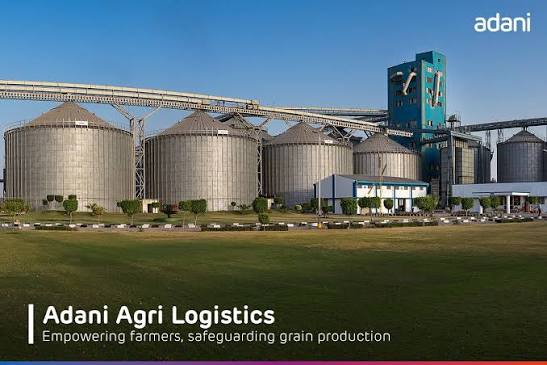
According to investigative media reports by the portal Newslaundry, through administrative changes made in tendering rules, the government perpetuated a ‘duopoly’ in its Hub and Spoke scheme aimed to create FCI silos. Adani Agri Logistics Ltd and Leap India Food & Logistics Private Ltd together bagged 110 out of 134 silo contracts worth more than Rs 16,500 crore. In other words, this means that around 46.5 lakh metric tonnes (LMT) of grains, out of the total 60, will be stored in silos owned by these two companies. Additionally, these silos have also been provided the status of market yards.
Documents investigated by the news portal, including official minutes of meetings held between Niti Aayog, FCI and other government bodies, shows that there was a deliberate watering down of the ‘anti-monopoly’ clauses proposed by the FCI. What followed was the creation of a corporate monopoly through formal ways. This is not far removed from the trend of increasing monopolistic corporate control over India’s public resources and infrastructure.
Digital Tools and Exclusion
Beyond these developments, there are proposals of further reforms attempting to include digital tools for targeted PDS delivery. Earlier this year, the country’s first-ever Central Bank Digital Currency (CBDC)-based Digital Food Currency pilot was launched in Gujarat. Under this programme architecture, digital coupons generated through the Reserve Bank of India (RBI) will be credited directly to beneficiaries as programmable digital currency (e₹).
This digital currency would be redeemable only for specific food commodities. The digital tool has been proposed to correct the Aadhar based biometric errors and is likely to be implemented in the Union Territories first before rolling it nationwide.
The process will include a long chain of beneficiary identification, voucher creation, biometric/OTP authentication, generation of the e-RUPI vouchers via SMS or QR code etc. It has been suggested that this will directly link the beneficiary to the attainment of ration, removing the middle role of dealers and other actors. This forms part of the digital financial governance that the government has been promoting.
However, as seen in the case of AADHAR-linked PDS allocations, this too could lead to greater chances of exclusion. This scheme takes it for granted that all beneficiary households have access to mobile phones and digital literacy to redeem the digital currency coupons. This notion is far removed from reality. An analysis of national level data shows that access to a smartphone, internet, and basic digital literacy parameters at present are still very inequitably spread across rural India, and more so ever among marginalized sections – the primary beneficiaries under the NFSA.
Lastly, the intention of these reforms is ultimately to slash food subsidies, restrict Minimum Support Prices (MSP) and reduce open procurement. The usual language of efficiency and equity is being adopted to justify cutting down the subsidy bills of the Union Government.
There needs to be greater vigilance and resistance against any effort to jeopardize India’s national food security programme, a lifeline for millions. Hence these retrograde amendments to the NFSA must be fought and defeated.