Magazine
Land Struggle – Need to Look Back to Basics
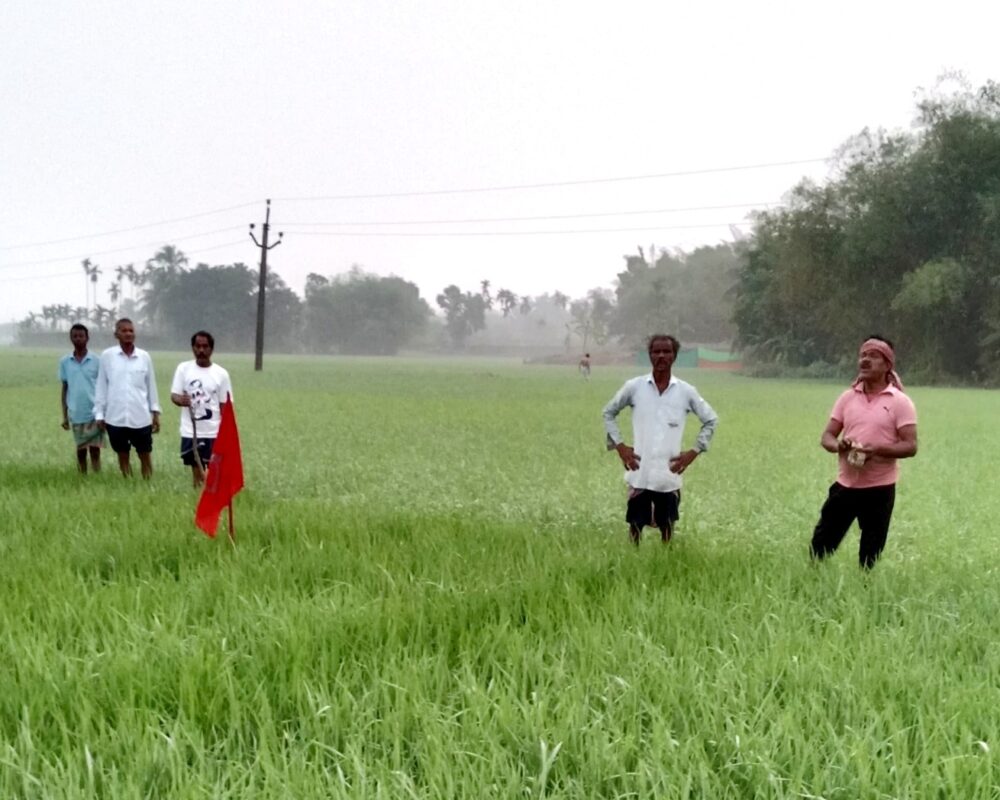
The All India Kisan Sabha (AIKS) has always sought to defend the interests of the peasantry, particularly the rural poor. Radical land reforms and “Land to the Tiller” have always been at the core of its programme. Land is the primary basis of a peasant’s livelihood and identity, and the peasantry has traditionally been differentiated into rich, middle, poor, and landless sections.
Without Land, there can be no Peasantry
AIKS has consistently demanded the redistribution of land to the landless, recognising that the struggle for land was fundamental to transforming the lives of the most exploited rural classes, large sections of whom are also the most socially oppressed.
At the same time, the peasantry has never been confined to landowners alone. Tenants, sharecroppers, lease cultivators, and agricultural workers, all dependent on land for their livelihood, have been integral to the rural agrarian community. AIKS led major struggles for their rights, like the Tebhaga movement in Bengal for a larger share of the crop for sharecroppers, the Punnapra-Vayalar struggle in Kerala, the Warli Adivasi struggle in Maharashtra, and the Bakasht land movement in Bihar. The climax of all these struggles in the mid and late 1940s was, of course, the historic peasant struggle in Telangana.
While comprehensive land reforms could be achieved only through a democratic transformation, AIKS recognised that sustained struggles for land redistribution, protection against eviction, and the distribution of government, ceiling-surplus, and forest land were essential tasks of the peasant movement.
Without land, there can be no peasantry; likewise, no genuine peasant movement can ignore the land question. Yet, as Indian agriculture evolved, new agrarian crises and demands emerged, broadening the scope of AIKS struggles while retaining land as a central class issue.
The Green Revolution of the late 1960s transformed Indian agriculture by increasing production through improved seeds, irrigation, fertilisers, credit, and public procurement. Alongside the basic demand for land reforms, new issues such as remunerative prices, assured procurement, affordable inputs, institutional credit, storage, marketing, and loan waivers gained prominence. Recognising this shift, the AIKS Varanasi Conference of 1979 expanded its charter of demands, broadening the movement’s fundamental social base of poor peasants and agricultural workers to include larger sections of middle peasants, and even small sections of rich peasants.
Neoliberal Assaults Sharpened by the BJP’s Modi Regime
After 1991, with the onset of the neoliberal policies in India, as agriculture became increasingly integrated into liberalised markets, AIKS also intensified struggles against neoliberal reforms, the WTO regime, privatisation, and free trade agreements.
The neoliberal turn sharpened under the BJP government led by Narendra Modi after 2014. The attempt to dilute the Land Acquisition, Rehabilitation and Resettlement (LARR) Act of 2013 through the 2014 Land Acquisition Ordinance provoked widespread resistance. AIKS played a leading role in building a broad coalition of over 75 organisations, resulting in the formation of the Bhumi Adhikar Andolan (BAA). Sustained nationwide mobilisation forced the government to withdraw the ordinance, marking the first major defeat of the Modi government’s agrarian agenda. The second major defeat was the repeal of the three Farm Laws after the historic and famous year-long struggle led by the Samyukta Kisan Morcha (SKM).
Government-Corporate-Driven Land Grab and Eviction
A new phase of the agrarian struggle has now come to the fore: the question of government-corporate-driven land grab and eviction. While land dispossession has long been a feature of India’s development model, it has accelerated under the present regime. Large-scale acquisition of fertile agricultural land, forest land, commons, water bodies, and hill regions is taking place across the country through a combination of laws, executive orders, state policies, and administrative measures. Although the 2014 Land Acquisition Ordinance was defeated, its objectives are increasingly being pursued through other legal and policy mechanisms. The result is an expanding process of land concentration and corporatisation affecting both rural and urban communities. The scale of this trend can be understood from a few examples.
- Bulldozer-led Evictions: Large-scale bulldozer demolitions have become a common method of displacement in urban, semi-urban, and rural areas. Several evictions have taken place in many places of Uttar Pradesh under the Yogi regime; at Goalpara and the Paikan Reserve Forest in Assam, as well as at Madrasi Camp, Bhoomiheen Camp, Gokulpuri, Jamia Nagar, Ashok Vihar, and the Lok Kalyan Marg area in Delhi. In Delhi alone, tens of thousands of people have been displaced in recent years, while similar drives continue across Karnataka, Maharashtra, Gujarat, and other states.
- Demolition of Workers’ Settlements: Millions of urban slum residents are migrants from rural India who depend on insecure livelihoods. Settlements that have existed for decades are increasingly being demolished for urban redevelopment, infrastructure, and industrial projects, often without adequate rehabilitation.
- Transport Infrastructure: Highways, expressways, railway projects, freight corridors, airports, ports, and metro systems are acquiring vast stretches of agricultural land. Projects such as the Ganga Expressway, the Shaktipeeth Mahamarg in Maharashtra, the Dedicated Freight Corridor, Noida International Airport (Jewar), Purandar Airport, and Vadhvan Port near Dahanu illustrate this trend.
- Industrial and Commercial Expansion: Industrial corridors, Special Economic Zones (SEZs), business districts, and real estate projects continue to displace cultivators and concentrate land ownership. Corporate-led urban expansion has accelerated land acquisition across many states.
- Mining, Energy, and Extractive Industries: Coal, bauxite, and other mining projects, including those in Hasdeo Arand, Sijimali (Odisha), Madhya Pradesh, Maharashtra, and the huge Great Nicobar project, involve extensive acquisition of forest and agricultural land. Large renewable energy parks, pumped-storage projects, and data centres are also emerging as major sources of displacement.
- Forest and Ecologically Sensitive Regions: Significant land transfers are occurring in Scheduled Areas and forest regions, including Karbi Anglong and Dima Hasao in Assam, often in the name of conservation, infrastructure, or industrial development. Major projects such as the Ken–Betwa river-linking project, the Char Dham road project, and the Hubballi–Ankola railway line have also raised concerns over displacement and ecological damage.
- Policy and Legal Mechanisms: Displacement is increasingly facilitated through administrative decisions, judicial orders, and weak implementation of protective laws. Although over 5.4 million claims have been filed under the Forest Rights Act, only about 2.54 million have been recognised, leaving millions of forest dwellers without secure tenure.
These examples represent only the visible extent of a much wider process of land dispossession. They underline the urgency of placing struggles against land grab and eviction at the centre of the peasant movement. Defending land rights remains a fundamental class question and one of the core objectives for which the All India Kisan Sabha was founded. Although some have argued that the land question has lost its relevance, the scale of contemporary dispossession demonstrates the opposite.
Land Struggles, BAA and SKM must be Strengthened
The Bhumi Adhikar Andolan (BAA) provides an important platform for organising struggles against land grab and eviction and defending land rights. AIKS should strengthen and expand this work by holding state-level land conventions and building broader campaigns around the issue. With the exception of a few states, such initiatives have remained limited, indicating the need to renew organisational attention to the land question.
At the same time, broader platforms such as the Samyukta Kisan Morcha (SKM) continue to play an important role in mobilising farmers around issues such as MSP, indebtedness, and agricultural policy. Strengthening these platforms while simultaneously rebuilding sustained struggles over land rights will enable the peasant movement to address both immediate economic demands and the structural question of land.
The West Bengal Provincial Krishak Sabha convened its first state Land Convention in Medinipur on 10 July 2026. It adopted a resolution that reaffirms the historic struggle for land rights and land reforms while addressing the contemporary challenges facing peasants. This is a welcome intervention and other states should also hold land conventions and chart out a plan to initiate large-scale land struggles. Such struggles can deepen peasant unity, strengthen worker-peasant solidarity, and reinforce the democratic class-based character of the movement.