Magazine
Sugar Price Rise – Robbery by Corporates and Big Traders
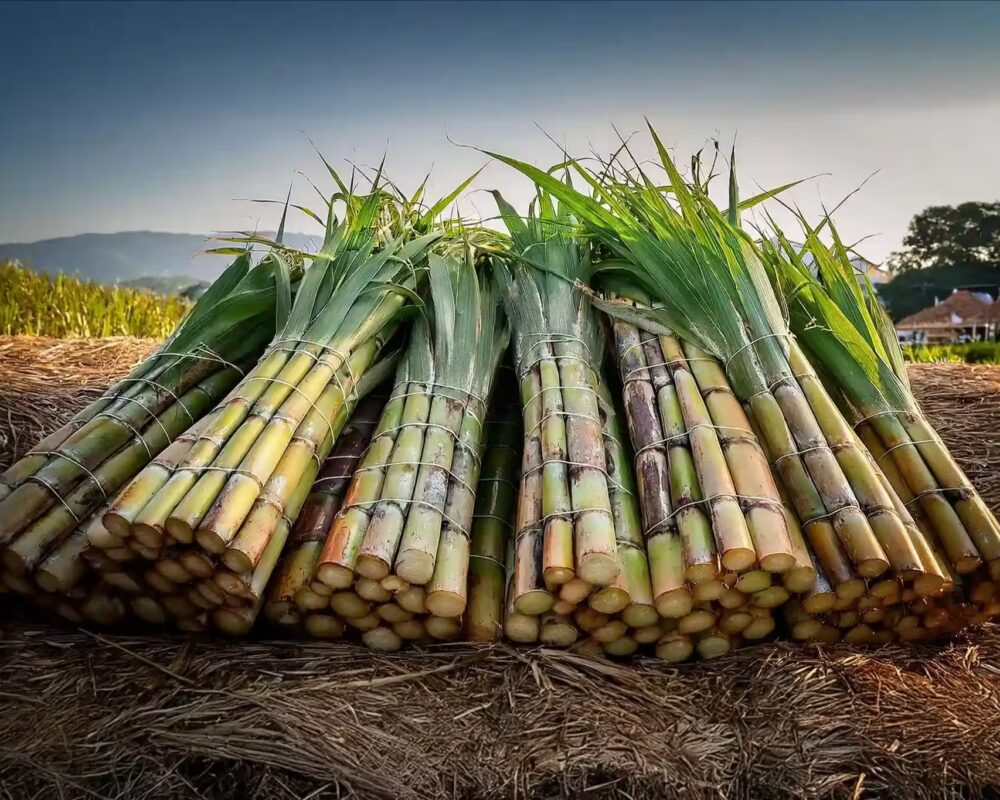
When the BJP government, which has been in power for more than a decade, announced the Fair and Remunerative Price (FRP) of sugarcane at Rs 365 per quintal on 5 May 2026, for the new sugar season starting in October, the retail price of sugar was Rs 44 to Rs 46 per kilogram (kg). Interestingly, the government had increased the price of sugarcane by a mere Rs 10 per quintal.
For the next two months, that is, until mid-July, sugar prices remained more or less stable. Then suddenly, sugar prices started rising, and in no time, taking everyone by surprise, by mid-August they reached Rs 70/kg and in some places up to Rs 75/kg. Meanwhile, despite the government’s claim, including the duty-free import of 10 lakh tonnes of raw sugar, this price rise continued until 12 September, when this article was written. Judging by today’s situation, it can be said that this might remain the same for at least another month when the new sugar season 2026-27 will begin.
More Than a Surprise
Sugarcane not only supports millions of farmers and farm workers engaged in its cultivation; it is an essential food item, the price of which directly affects family budgets. So, such a sharp increase in sugar prices obviously shocked a vast number of consumers. Even the BJP government, which has the responsibility of controlling both sugarcane and sugar prices and thus knowing everything, had to pretend to be shocked. But this is not merely a matter of shock and surprise; it goes beyond that. Sugar has not only brought long-standing but concealed inflation into the discussion, but it has also created an atmosphere to hold the government accountable for this bitter mess.
According to estimates based on an analysis of available government data regarding domestic sugar production and consumption, in just two months, this massive price hike extracted about 35 billion rupees from the pockets of retail sugar consumers – individuals and families. This loot is massive. A large portion of the consumers who fell victim to this robbery are the sugarcane farmers themselves, whose sugarcane is bought from them at cheap rates on the pretext that consumers will get cheaper sugar. Obviously, this bounty was pocketed by corporates and big traders.
Cheap Sugarcane, Expensive Sugar
Sugarcane farmers realised that they had received only Rs 330 to Rs 355 per quintal for the sugarcane from which this costly sugar was produced till April. Until mid-July, the price of this very sugar was Rs 45/kg, and mills did not complain of any kind of loss in selling sugar at this rate. Then what happened which made sugar so expensive? Was sugar production lower than the estimated domestic demand? Did the festive season create that much additional demand? Was there not enough sugar stock to meet domestic demand? Was too much sugar exported? According to government data, the answer to all these questions is NO! Then did the government put food security of an essential commodity like sugar at stake to produce ethanol? The government answered ‘no’ to this as well.
Then did this happen because of hoarding and speculation? The government could not clearly deny this. It pointed towards hoarding and speculation itself, while trying to cover it up by citing a weak monsoon, El Nino, festivals, and future trading making an attempt to brush the matter aside by presenting hoarding and speculation as unavoidable consequences. Whatever it may be, the government was caught red-handed once again, and what became clear was that the dacoity occurred right under the Chowkidar’s supervision. The BJP government, which often puts forward the argument that giving higher MSP to farmers will hurt the interest of consumers, has utterly failed in protecting both.
Push Back Anti-Farmer Policy
Given the continuously rising production costs and the income generated by mills from the sale of ethanol and other by-products of sugar, the sugarcane farmers’ organization, the All India Sugarcane Farmers Federation (AISFF), had raised a demand of at least Rs 550 per quintal for sugarcane in the 2025-26 season. Some of its state units have demanded more, as per the local situation. AISFF has also put forward a demand to control the price of sugar and cap it at Rs 42/Kg.
AISFF Attains Success in Tamil Nadu
On 10 August 2026, the Chief Minister of Tamil Nadu announced that the State government would provide an incentive of Rs 709.50 per tonne of sugarcane for the 2025-26 crushing season. The Union government has fixed and announced a FRP of Rs 3290.05 per tonne for sugarcane with a 9.5% recovery rate. The average recovery for sugarcane in Tamilnadu is 8.4 per cent. By combining the Union government’s FRP with the incentive now announced by the State government, farmers will receive a total price of Rs 4,000 per tonne. This marks a success for the sustained efforts of the Tamil Nadu Sugarcane Farmers’ Association, associated with the AISFF. The State government will directly disburse the incentive to sugarcane farmers after obtaining details of the cane registered and crushed at sugar mills.
An understanding is developing amongst the sugarcane farmers that they should not be treated merely as raw material suppliers. They are the foundation on which the whole sugar and allied industries stand. They must go forward to get their rightful stake. Their struggle for a farmer-centric policy, which will protect farmers and consumers both, will be the way forward.