Magazine
Victorious Struggle for Third Farm Loan Waiver in Maharashtra
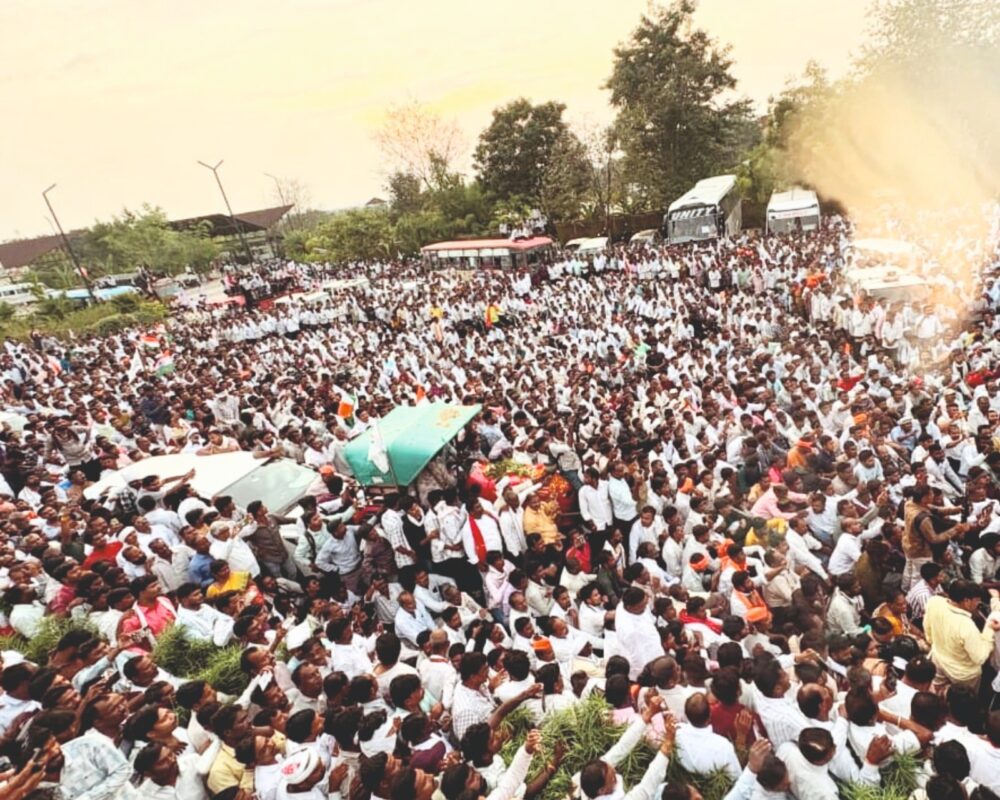
After a determined and prolonged struggle of several months, on 10 July 2026, the Government of Maharashtra finally announced the withdrawal of two restrictive conditions that had been imposed on the 2026 Farm Loan Waiver Scheme declared a month earlier on 2 June. This marked a major victory for the farmers’ movement in the state. It was the third major farm loan waiver wrested by the farmers of Maharashtra during the last one decade from 2017 to 2026.
During the Maharashtra Legislative Assembly election campaign of 2024, Chief Minister Devendra Fadnavis had promised that if his party came to power, it would grant a complete loan waiver to farmers. However, after assuming office, this promise was conveniently forgotten. The All India Kisan Sabha (AIKS), Prahar, and various other farmers’ organizations repeatedly reminded the Chief Minister of his commitment through sustained protests. In response, his stand was, “We will grant a loan waiver, but we will not announce the date.”
This delay led to massive protests across the Vidarbha region of the state in October 2025. Various farmers’ organizations and their leaders united, and the movement received widespread public support. A mass joint rally of over 10,000 peasants, mainly from Vidarbha, and also from Marathwada, marched from Amravati to Nagpur demanding a complete farm loan waiver. The joint rally included a large AIKS contingent.
The state government was compelled to hold discussions with farmer leaders. Following intense negotiations at the Sahyadri State Guest House in Mumbai, the Chief Minister finally announced that the farm loan waiver would be implemented by 30 June 2026. However, when the scheme was actually announced on 2 June 2026, it included several restrictive conditions that deprived lakhs of farmers of its benefits.
Restrictive Conditions
To avoid repeating the problems associated with the earlier loan waivers, the state government issued a Government Resolution (GR) on 30 October 2025, constituting a Committee under the chairmanship of the Chief Minister’s Economic Advisor, Praveen Pardeshi.
However, the Pardeshi Committee’s recommendations were primarily aimed at providing relief to banks and addressing Maharashtra’s weakened economy rather than helping farmers. Its recommendations included excluding farmers who had received the 2019 loan waiver, requiring regular borrowers to have maintained regular loan repayment for at least four years, and insisting that farmers first repay the portion of their outstanding loans exceeding Rs 2 lakh. These recommendations clearly served the interests of banks rather than those of farmers.
Although the report made passing references to issues such as irrigation, value-addition chains, and the distribution of coarse grains through the public distribution system, its principal focus remained loan recovery and protecting the banking sector. The committee even made the extraordinary recommendation of creating a Rs 5,000 crore “dedicated credit provision” to transport urban waste and dump it on agricultural land—an idea which was heavily criticized as likely to further damage farmland that was already damaged.
While unveiling the scheme on 2 June, Chief Minister Devendra Fadnavis claimed that the loan waiver scheme would benefit 56.4 lakh farmers and provide loan relief worth Rs 36,000 crore.
In reality, however, under the loan waiver scheme announced in the name of the legendary queen Ahilyadevi Holkar, 12.71 lakh farmers who had already received a loan waiver in 2019, had subsequently fallen back into debt due to natural calamities, and were eligible for the 2026 scheme, were to receive only Rs 50,000 instead of a loan waiver of up to Rs 2 lakh.
Similarly, 23.63 lakh regular loan-paying farmers were eligible for only a Rs 50,000 incentive grant, subject to stringent conditions, instead of Rs 2 lakh. Even there, they were required to have repaid crop loans in at least two of the financial years 2022–23, 2023–24, and 2024–25, and also had to repay crop loans during 2025–26 and 2026–27.
Additionally, 2.9 lakh farmers were placed under a One-Time Settlement (OTS) scheme, which required them to first repay the portion of their outstanding loans exceeding Rs 2 lakh before becoming eligible for relief.
Taken these three conditions together, they adversely affected 39.24 lakh farmers—approximately 70 per cent of all intended beneficiaries. Several other restrictive conditions were also imposed.
Based on these figures, the protestors effectively challenged the Chief Minister’s claim that 90 per cent of farmers would benefit from the scheme. As a result, the movement gained even broader public support, and the agitation intensified.
Victory of the Struggle
The restrictive conditions attached to the loan waiver scheme triggered a strong statewide agitation. In the first week of June 2026, the AIKS publicly burned copies of the government’s loan waiver notification in hundreds of villages across Maharashtra. Large demonstrations were organized outside tehsil offices throughout the state. A memorandum was submitted by the AIKS leadership to the State Agriculture Minister Dattatraya Bharane in Pune.
NCP MLA Rohit Pawar began a hunger strike at Pandharpur, and the AIKS state leadership extended its support by joining the protest. A rally was organized in Sambhajinagar. Another farmer leader Ravikant Tupkar also undertook a hunger strike and attempted to enter the State Legislature building. On 10 July, in the Legislative Assembly, CPI(M) MLA Vinod Nikole staged a protest by displaying placards and addressed the media demanding the removal of conditions in the loan waiver scheme. Leaders of several other opposition parties also strongly raised the issue.
In the first week of July 2026, the state government itself called farmer leaders for a meeting in Mumbai to discuss their objections to the scheme. This was to be attended by Praveen Pardeshi. However, five minutes before the meeting, a message came from the Chief Minister’s Office that the meeting had been cancelled. This created great anger among the farmer leaders. Large demonstrations of thousands of farmers took place all over the state on 9-10 July against this casual attitude of the rulers. The government was finally compelled to reconsider the restrictive conditions attached to the scheme.
Finally, on 10 July, Chief Minister Devendra Fadnavis had to declare an increase in the loan waiver for 12.71 lakh farmers—those who had received a loan waiver in 2019 and had again become eligible in 2026—from Rs 50,000 to Rs 2 lakh each.
The government also had to withdraw the condition requiring 23.63 lakh regular loan-paying farmers to repay their loans during the financial year 2026–27. As a result, a total of 36.34 lakh farmers became eligible for relief.
Although these two major conditions were removed, the demand remains pending that regular loan-paying farmers should receive a loan waiver of up to Rs 2 lakh, just like other beneficiaries, instead of a separate incentive grant of Rs 50,000.
Sugar factory workers, electricity board employees, workers in milk cooperatives and spinning mills, as well as elected representatives from poor families, have also been excluded from the loan waiver scheme. Continued struggle is therefore necessary on these issues as well.
Third Loan Waiver in a Decade
Since 2017, sustained and determined struggles in Maharashtra, jointly and independently by the AIKS, have enabled farmers to secure loan waivers on three separate occasions. This is a unique achievement in India, with no other state having witnessed such repeated debt relief through large and militant farmers’ movements. It reflects both the strength of the farmers’ movement and the level of political awareness among farmers. It also demonstrates that farmers have increasingly begun to act as an organized pressure group.
The novel statewide farmers’ strike that began on 1 June 2017 at Puntamba village (in which farmers refused to get their milk, vegetables and fruits to the city markets), followed by the massively successful Maharashtra Bandh on 5 June, compelled the government to announce its first major loan waiver scheme after intense discussions with the Struggle Committee on 11 June.
Under the Chhatrapati Shivaji Maharaj Shetkari Sanman Yojana, introduced in 2017 by the Devendra Fadnavis-led government, loan waivers and incentive grants were provided amounting to Rs 18,762 crore, covering 44.04 lakh farmers’ loan accounts.
In March 2018, the AIKS independently led the 7-day, 200 Km-long iconic first Kisan Long March from Nashik to Mumbai, in which over 50,000 peasants from all over the state participated. Along with the major victories won by it on the Forest Rights Act (FRA) implementation issue, extending the ambit of the farm loan waiver was also another major issue which was highlighted.
As a result, in 2019, under the Mahatma Phule Karj Mukti Yojana, the Uddhav Thackeray-led state government waived loans worth Rs 20,500 crore covering 32.29 lakh farmers’ loan accounts. In 2022, under the same scheme, incentive grants totaling Rs 5,249 crore were provided to 14.50 lakh farmers’ loan accounts. Thus, taken together, a total of 46.79 lakh farmers received loan waiver worth Rs 25,749 crore under this scheme.
Now, in 2026, the state government claims that it will provide loan waivers worth Rs 36,000 crore to 56.4 lakh farmers. Although the actual number of beneficiaries and the amount disbursed is likely to be a little lower because of the remaining few eligibility conditions, securing loan waivers through sustained and determined struggles on three separate occasions within a decade is a remarkable achievement by national standards.
The farmers of Maharashtra have succeeded in securing these loan waivers through fighting farmers’ unions, effective political pressure, strategic planning, and persistent struggle.
Along with a few other farmers’ organisations, the collective leadership of the AIKS all over the state has played a major role in the victorious struggles for these three loan waivers in the past one decade, just as it has played a major role in the victorious struggles on the FRA implementation and other land-related issues. Among those who have played a leading role in these struggles are AIKS National President Dr Ashok Dhawale, Former State President J P Gavit, ex-MLA, State General Secretary Dr Ajit Nawale, State President Umesh Deshmukh, CITU State Secretary Vinod Nikole, MLA, and all AIKS State Office Bearers and AIKS State Council members.
Fundamental Solutions Necessary
Even after announcing these loan waivers, the government’s continued anti-farmer and pro-corporate policies have persisted. The pro-corporate crop insurance scheme has left farmers helpless during natural disasters. Corporate companies have been given a free hand to exploit farmers through agricultural services and farm inputs, resulting in rising production costs. The government has also continued to delay transferring ownership of cultivated land to the farmers who actually till it. At the same time, even land legally owned by farmers is being acquired for various projects and handed over to corporate companies. As a result, the agrarian crisis in Maharashtra has continued to deepen, and farmer suicides have kept increasing.
Finally, the most fundamental issue which must be sharply underlined is that the BJP-led Union Government under Narendra Modi has constantly reneged on its 2014 promises of a remunerative MSP guarantee and a nationwide loan waiver. While not a single rupee of central loan waiver has been granted to crores of farmers in distress, this same government has had no shame in writing off loans worth a whopping Rs 16.35 lakh crore to its crony corporates in the last one decade!
Added to this is the slew of Free Trade Agreements (FTAs) which the Modi regime has already signed, or will be signing, with the USA, EU, UK, and New Zealand. These will be disastrous to the livelihood of crores of our farmers and workers, and also to lakhs of MSME entrepreneurs.
If we genuinely wish to stop farmer suicides and combat the agrarian crisis, fundamental reforms in the agricultural sector are essential. Along with loan waivers, the recommendations of the Swaminathan Commission that are intended to safeguard farmers’ interests like remunerative MSP guarantee and others should be implemented without any further delay. The alternative agricultural policies repeatedly proposed by the AIKS should also be adopted.
If these measures are not taken, the future will remain difficult. After this third loan waiver, the situation is likely to return to “Ye Re Majhya Maglya”—a Marathi expression meaning “Back to Square One”, where the same problems will recur without any lasting solution.